
Jaw Cyst and Tumour Treatment
At our practice in Konyaaltı, Antalya, treatment of jaw cysts and tumours starts with a thorough examination, a panoramic X-ray and, when needed, a 3D CT scan. We assess the type and size of the lesion and its relation to the surrounding teeth and nerves to prepare a treatment plan tailored to you. Our aim is to remove the lesion safely and protect the health of the jawbone.
 Spec. Dt. Seçil Sümengen Yazıcı
What Is a Jaw Cyst?
A jaw cyst is a cavity that develops inside the jawbone and is filled with fluid or soft tissue. It is often related to the root of a tooth or to an impacted tooth. Cysts usually grow slowly and may go unnoticed for a long time without any symptoms, being found by chance on a routine dental X-ray.
What Are the Symptoms?
- Often there are no symptoms and the cyst is found on an X-ray
- There may be slowly growing swelling in the jaw or palate
- Teeth may shift or become loose
- Pain and swelling may appear if the cyst becomes inflamed
- Rarely, numbness may be felt in the lip or chin
If you notice a sore, swelling or change of colour in your mouth that has not healed within two or three weeks, we recommend having it examined without delay.
Jaw Tumours
Most tumours found in the jawbone are benign. Even so, an accurate diagnosis of every lesion is important so that treatment can be planned accordingly. This is why every tissue removed is sent for pathological examination and a follow-up plan is made based on the result.
Diagnosis
A panoramic X-ray and, when needed, a 3D CT scan are used for diagnosis. They show the borders of the lesion and its relation to structures such as nerves, the sinus and tooth roots clearly. When needed, a small piece of tissue is taken for a biopsy to confirm the diagnosis.
The Treatment Process
Treatment usually involves removing the lesion completely by surgery. Depending on the size of the lesion, the procedure is carried out under local or general anaesthesia. For very large cysts, the cyst may first be reduced in size and then removed. The tooth related to the cyst may need root canal treatment or extraction. After the cyst is removed, the remaining cavity is filled with a bone graft when needed.
Cyst and tumour surgery falls within oral and maxillofacial surgery. At our practice, these procedures are planned and carried out personally by Dr. Seçil D. Sümengen Yazıcı, a specialist in this field.
Healing and Follow-up
There may be swelling and sensitivity for a few days after the procedure, and these are controlled with the medication provided and cold compresses. It takes time for the bone to fill the cavity. During this time and afterwards, X-rays are taken at intervals to follow healing and check for any recurrence.
- For the first 24 hours, avoid hot food and drinks, smoking and using a straw.
- Apply cold compresses to the outside of your face at intervals for the first 48 hours.
- Choose soft, lukewarm foods for a few days.
- Take the medication provided regularly and do not miss your follow-up X-rays.
Content: Dr. Seçil D. Sümengen Yazıcı, Oral and Maxillofacial Surgeon · Last updated: 29 September 2026
Jaw Cysts and Tumours: Frequently Asked Questions
Can’t find your answer? Call us or message us on WhatsApp.
Ask on WhatsAppDoes a jaw cyst go away on its own?
No. Jaw cysts usually do not disappear on their own and can grow over time, damaging the bone and teeth. This is why they need to be treated.
How can I tell whether it is a cyst or a tumour?
X-rays and CT scans give important information, but the definitive diagnosis is made by pathological examination of the removed tissue.
Is the operation done under general anaesthesia?
Most small lesions can be removed under local anaesthesia at the practice. Large lesions may require general anaesthesia.
Will my tooth be extracted?
Not always. The tooth related to the cyst can often be saved with root canal treatment. Depending on its condition, extraction may be needed.
Can a cyst come back?
Most cysts that are removed completely do not come back. However, some types of cyst carry a risk of recurrence, so regular X-ray follow-up is important.
What happens to the removed tissue?
Every tissue removed is sent for pathological examination. The result is used to decide the follow-up plan.
How long does healing take?
The soft tissues heal within a few weeks. The bone filling the cavity may take months, depending on the size of the lesion, and is followed with X-rays.
Is the cavity filled with a bone graft?
Small cavities usually fill with bone on their own. For large cavities, a bone graft may be used to support healing.
Treatments You May Be Interested In
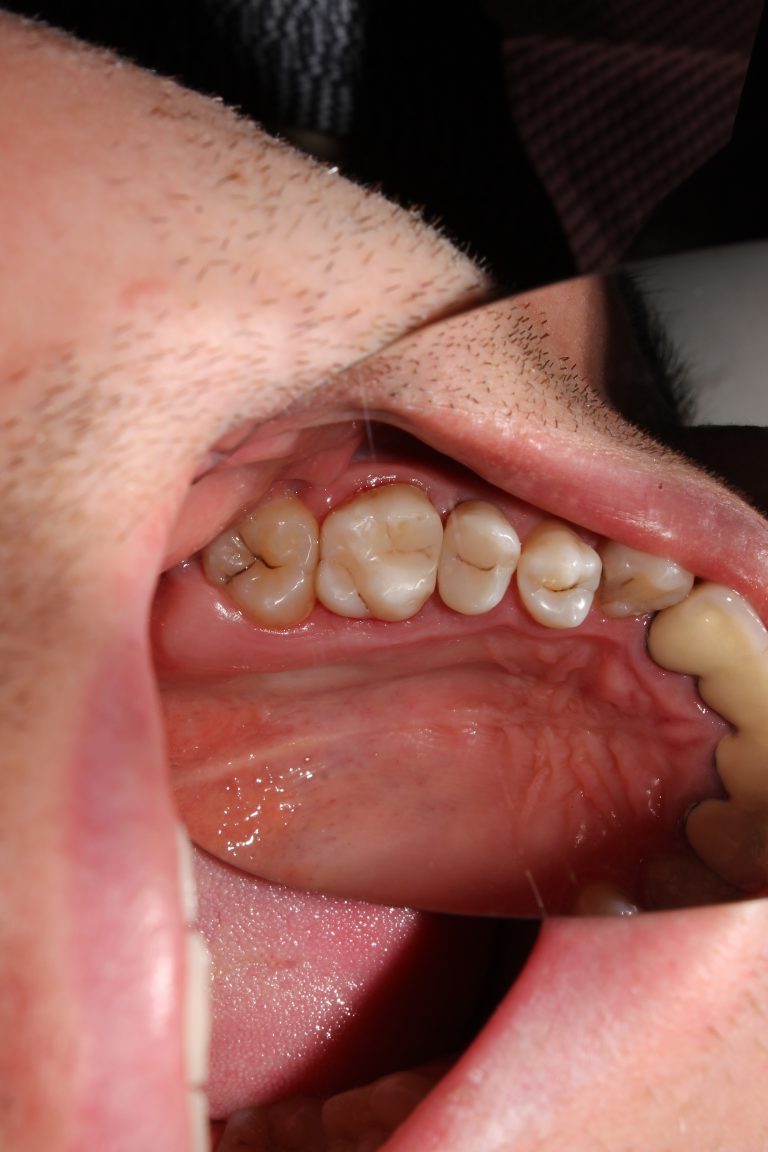
Wisdom and Impacted Tooth Extraction
Wisdom and impacted teeth are planned and removed by an oral and maxillofacial surgeon.
Learn more →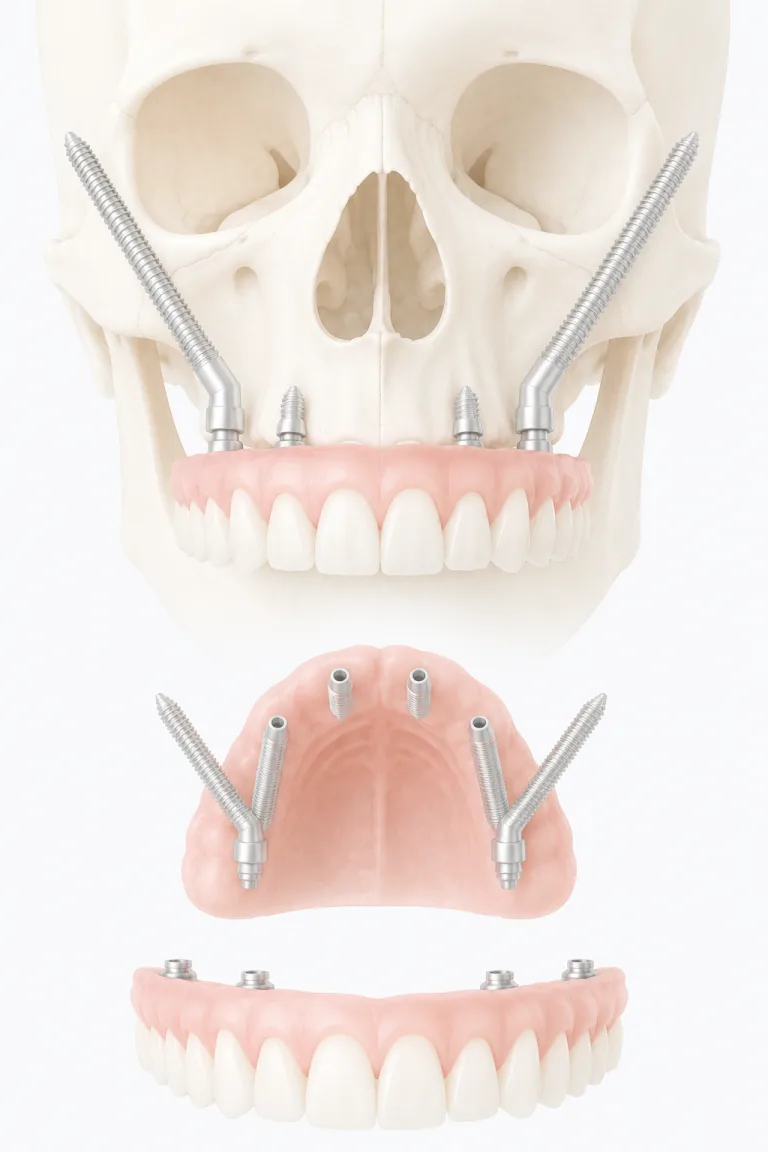
Zygomatic Implant
Fixed teeth anchored in the cheekbone when the upper jaw lacks bone.
Learn more →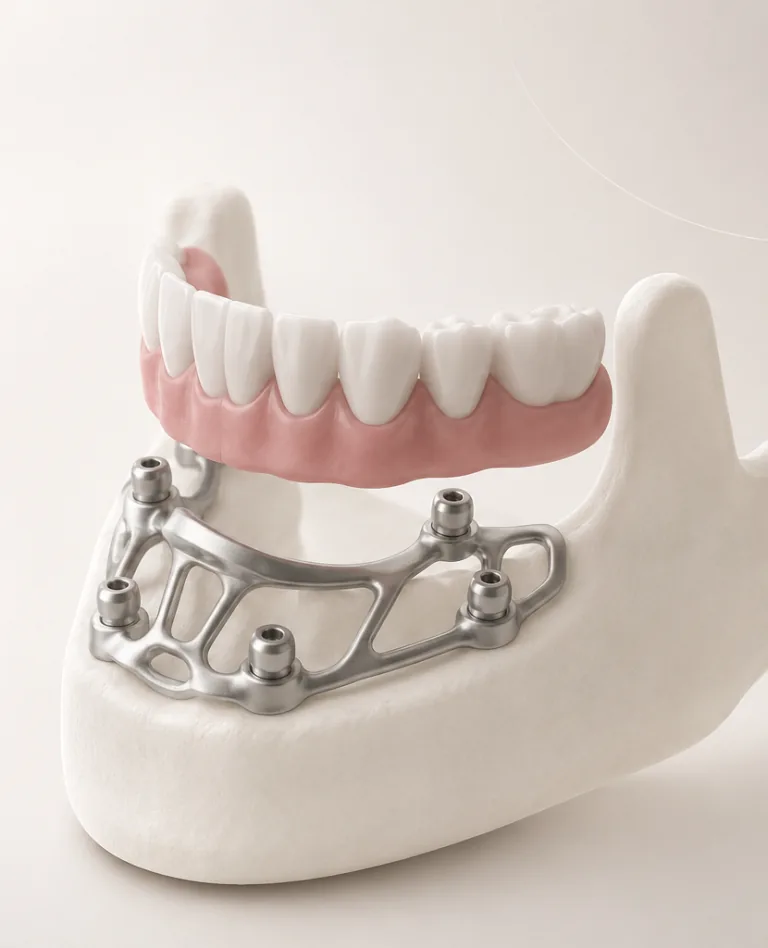
Subperiosteal Implant
A custom implant that sits on the jawbone when bone volume is insufficient.
Learn more →